
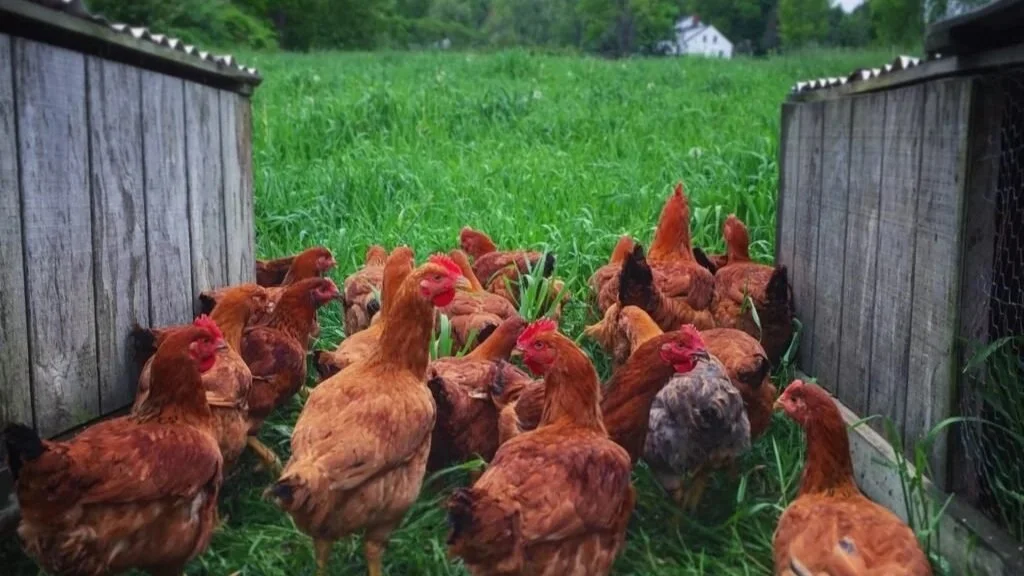
Why Pasture-Raised?
Raising poultry on pasture offer meaningful ecological and human health benefits. After a few weeks in a brooder as chicks, when they are old enough, our chickens actually live their whole lives on pasture — they don’t just “have access to outdoors” like the “pasture-raised” label birds on corporate farms.
Birds raised on pasture contribute to soil regeneration through activating soil biology and the stimulation of plant growth as they move across landscapes.
Poultry manure is rich in nitrogen and phosphorus, providing essential plant nutrients. We regularly move them to “mob-graze” or concentrate on a certain area with portable electric netting to avoid over-grazing and protect them crowding to spread harmful parasites.
The combination of their manure and grazing pressure promotes the growth of diverse plant species in pastures, which increases overall pasture biodiversity and improves the nutritional value for other livestock.
As they move around the farm, they spread this fertilizer evenly and supply plant nutrients near perennial crops in our small fruit yards and orchard. We also rotate our laying hens with the same system in our market garden as part of a regular crop rotation with cover crops. Unlike confined operations (where your supermarket or fast food chicken comes from), pastured systems reduce waste concentration and runoff, supporting cleaner water and healthier ecosystems.
Pastured poultry get to exhibit their natural behaviors. Chickens use their claws to scratch, peck and forage, which acts as a form of light tillage that aerates the soil, reduces compaction and helps incorporate organic matter. Chickens are also highly effective at controlling food crop “pests” and will eat “weed” seeds. These chickens get to be chickens.
Regarding human health, pastured poultry typically yields eggs and meat that is more nutrient-dense, with higher levels of omega-3 fatty acids, vitamins and beneficial antioxidants due to the birds’ diverse, natural diet and regular access to fresh air and sunlight.
A Better Bird
We also raise moderate-growing meat birds that thrive on pasture, unlike some breeds for industrial meat production. Our favorite is one breed called a Freedom Ranger. They are active foragers that thrive outdoors and express natural behaviors such as scratching and hunting insects. This activity not only improves animal welfare but also enhances meat quality, resulting in richer flavor, firmer texture and improved nutritional profiles. Their physiology leans toward medium, tender breast meat and tasty dark meat. They’re just healthier and tastier birds! We’d choose them any day over the faster-growing breeds like the Jumbo Cornish Cross, which struggle to live into adulthood with various health conditions.
Since they take about 4-6 weeks longer to raise until slaughter weight, they incur more feed and labor costs, unfortunately. But it is a different bird and our customers will tell you it’s worth it.
And Better Feed
We’ve always fed our Freedom Rangers NC, non-GMO feed from Bender Farms, but are hoping to move to local, Certified Organic feed from Reedy Fork Farm of Alamance County in 2026. We’re also running production trials of supplementing feed with black soldier fly larvae produced on the farm. As the multi-species orchard matures, the poultry will eventually feed on dropped mulberries and culled orchard fruit.
Black soldier fly larvae provide a highly efficient, protein-rich feed source that upcycles organic waste, and orchard fruits add natural sugars, micronutrients, and antioxidants—closing nutrient loops within the local ecosystem and reinforcing a truly regenerative, place-based food system.
2026 Prices
$8.00/lb Whole Bird, 3 to 4-1/2 lb average
$8.50/lb Half Bird
$16.00/lb Breast, boneless, 2-pack (skin-on)
$11.50/lb Thighs, 4-pack (skin-on)
$10.50/lb Leg quarters, 2-pack (skin-on)
$9.50/lb Drumstick, 4-pack (skin-on)
$9.00/lb Wings, 12-count packs with 6 each drum and flat
$3.50/lb Stock Bones
$3.50/lb Feet
$8.00/lb Livers or Hearts